TheMostReadBook.org

An English translation of the Quran that is as close as possible to the Arabic sacred text
View active topics
  Verse(s):    
View unanswered posts


Forum locked This topic is locked, you cannot edit posts or make further replies.  [ 5 posts ] 
Author Message
 Post subject: Did 65:4 and 33:49 abrogate 2:228?
PostPosted: 17 Jan 2010, 21:46 
Offline
Site Admin
User avatar

Joined: 04 May 2009, 16:10
Posts: 4558
Location: USA
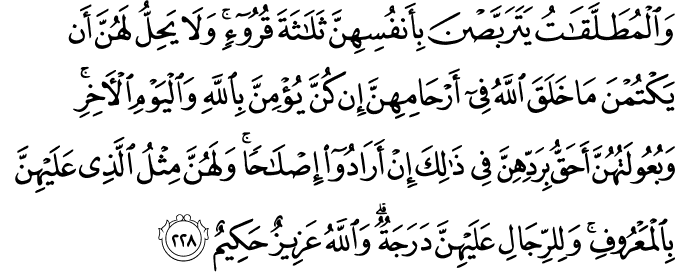
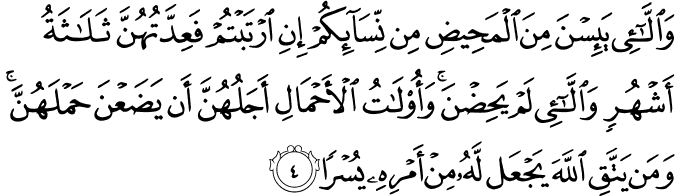
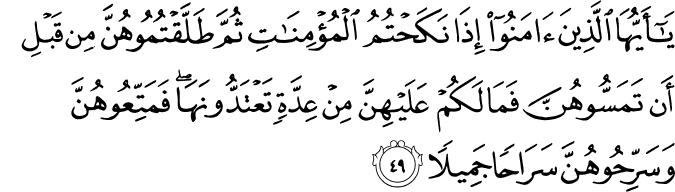
This the case of the duration of the grace peiod (`Idda) which a divorced woman must wait before she can marry again, or before her husband cannot take her back.

These are the verses,

is claimed to have been abrogated by

And by

Here is what Ibn Al-Jawzi reports about this case,

ذكر الآية التاسعة والعشرين: قوله تعالى "والمطلقات يتربصن بأنفسهن ثلاثة قروء". قد ذهب جماعة من القدماء إلى أن في هذه الآية منسوخة ثم اختلفوا في المنسوخ منها على قولين: القول الأول أنه قوله "والمطلقات يتربصن بأنفسهن ثلاثة قروء"، قالوا فكان يجب على كل مطلقة أن تعتد ثلاثة قروء، فنسخ من ذلك حكم الحامل بقوله "وأولات الأحمال أجلهن أن يضعن حملهن"، ونسخ حكم الآيسة والصغيرة من ذلك بقوله "واللائي يئسن من المحيض من نسائكم إن ارتبتم فعدتهن ثلاثة أشهر واللائي لم يحضن"، ونسخ حكم المطلقة قبل الدخول بقوله "إذا نكحتم المؤمنات ثم طلقتموهن من قبل أن تمسوهن فما لكم عليهن من عدة تعتدونها"، وهذا مروي عن ابن عباس رضي الله عنهما وقتادة، إلا أن ابن عباس استثنى ولفظ قتادة نسخ. أخبرنا إسماعيل بن أحمد قال أبنا أبو الفضل البقال قال أبنا أبو الحسين بن بشران قال أبنا إسحاق الكاذي قال بنا عبد الله بن أحمد قال حدثني أبي قال بنا عبد الوهاب عن سعيد عن قتادة "والمطلقات يتربصن بأنفسهن ثلاثة قروء"، قال فجعل عدة المطلقة ثلاث حيض ثم نسخ منها التي لم يدخل بها فقال "إذا نكحتم المؤمنات ثم طلقتموهن من قبل أن تمسوهن فما لكم عليهن من عدة تعتدونها"، فهذه ليس لها عدة وقد نسخ من الثلاثة قروء امرأتان، فقال "واللائي يئسن من المحيض من نسائكم إن ارتبتم"، فهذه العجوز التي لا تحيض عدتها ثلاثة أشهر، ونسخ من الثلاثة قروء الحامل فقال "وأولات الأحمال أجلهن أن يضعن حملهن".
والقول الثاني أن أول الآية محكم وإنما المنسوخ منها قوله "وبعولتهن أحق بردهن"، قالوا فكان الرجل إذا طلق ارتجع سواء كان الطلاق ثلاثا أو دون ذلك فنسخ هذا بقوله "فإن طلقها فلا تحل له من بعد حتى تنكح زوجا غيره".
وأعلم أن القول الصحيح المعتمد عليه أن هذه الآية كلها محكمة لأن أولها عام في المطلقات، وما ورد في الحامل والآيسة والصغيرة فهو مخصوص من جملة العموم وليس علي سبيل النسخ. وأما الارتجاع فإن الرجعية زوجة ولهذا قال "وبعولتهن"، ثم بين الطلاق الذي يجوز منه الرجعة فقال "الطلاق مرتان" إلى قوله "فإن طلقها" يعني الثلاثة، "فلا تحل له من بعد حتى تنكح زوجا غيره


His view matches mine, namely that all three verses together make up the ruling about the grace period. None of them is an island. One (2:228) specifies the basic grace period as three menstruations, another (65:4) specifies how the period is calculated in the case of the women who do not menstruate, such as menopausal and pregnant women. 33:49 makes an exemption from the above ruling for the special case of no consummation of marriage.

Abu-Abdillah Shu`la agrees, in his book صفوة الراسخ في علم المنسوخ والناسخ, as reported by Dr. M. Ibrahim Faaris in his presentation of his book, page 75.

_________________
A candle loses nothing by lighting another candle.


Top
 Profile  
 
 Post subject: Who said what
PostPosted: 21 Jan 2010, 19:07 
Offline
Site Admin
User avatar

Joined: 04 May 2009, 16:10
Posts: 4558
Location: USA
For:
Ali (according to Al-Khazraji),
Ibn Mas`ood, Abu-Hurayra, Umm Salama and Maalik (all apparently meaning by naskh specification),
Qataada,
Ibn `Abbaas (Ibn Al-Jawzi reports that he used the word "exempted" and not "abrogated"),
An-Nahhaas, Makki, Ibn Al`Arabi and Al-Khazraji (all apparently meaning by naskh specification).

Against:
The majority, according to An-Nahhaas,
Al-Asfahaani,
Ibn Al-Jawzi,
An-Nahhaas and Makki (per Dr. Faaris),
Abu-Abdillah Shu`la,
Muhammad Al-Ghazaali,
Dr. Mustafa Zayd,
Dr. Ahmad Hijaazi As-Saqqa,
Dr. Az-Zalmi,
Dr. N.A. Tantaawi,
Dr. M. Ibrahim Faaris.

_________________
A candle loses nothing by lighting another candle.


Top
 Profile  
 
 Post subject: Re: Did 65:4 and 33:49 abrogate 2:228?
PostPosted: 28 Aug 2010, 13:37 
Offline
Site Admin
User avatar

Joined: 04 May 2009, 16:10
Posts: 4558
Location: USA
Al-Khazraji, in his book نفس الصباح في غريب القرآن وناسخه ومنسوخه, volume 2, pages 718-722, discusses this case at length, the only case which he discusses at length. He said that 2:228 was general about all divorcées, until naskh excluded pregnant divorcées in 65:4. He quotes An-Nahhaas, Makki and Ibn Al-`Arabi saying that. For one thing, that shows that all four scholars used the word naskh to describe exclusions and specification.

He then goes on to say that those scholars were specific that 65:4 is not about widows but about divorcées only. Their evidence is the preceding and next verses show that the context of 65:4 is divorce. Of the scholars who so opined were Ali and Ibn Abbaas, said Mallik in his book Al-Muwatta'.

Al-Khazraji then quotes a narration from Ibn Abbaas when Abu-Hurayra was sitting with him. A man asked them about a pregnant widow, they answered, "The later of the two terms." Reported by Al-Bukhaari and narrated by Abu-Salama.

He quoted another narration by `Ataa' from Ibn Abbaas saying, "If her husband dies and she is pregnant, then the later of the two terms. If he divorced her and she was pregnant, then he died, then the later of the two terms." `Ataa' asked him, "What about 'And the pregnant ones, their term is when they deliver' (65:4)?" He answered, "That is for divorce without death of the husband." Narrated by Ubayy ibn Abdir-Rahmaan and reported by Maalik in his book Al-Muwatta'.

Then Al-Khazraji reports another opinion that 65:4 abrogated the generality of the waiting period mentioned in Chapter 2, namely, 2:234 and 2:240. Clearly again using the word naskh to mean specification. The evidence of those scholars, according to Makki, is a hadeeth of the Prophet (PBUH). Ubayy ibn Ka`b asked him about 65:4, is it about a woman divorced three times, or is it about a widow? The Prophet (PBUH) answered, "Both." Reported by As-Suyooti, At-Tabari and Al-Haakim. Al-Khazraji cast doubt on its authenticity. Makki said that it is the majority opinion and that it's not an abrogation but a specification. I agree.

Another evidence is a hadeeth narrated by Umm Salama, may God have been pleased with her about Sabee`a bint Al-Haarith. Her husband, Sa`d ibn Khawla died the year of the farewell pilgrimage and she delivered a baby a few nights after he died. Abus-Sanaabil ibn Ba`kak had apparently advised her that she had to wait four months and ten days before she can marry again. The Prophet (PBUH) commented, "Not like Abus-Sanaabil said! You are clear, go get married." Reported by Maalik, Al-Bukhaari and An-Nasaa'i. Al-Khazraji said this hadeeth is authentic and the other has weakness.

Finally, he said that of the scholars who opined that 65:4 is about both a divorcée and a widow were Ibn Mas`ood, Abu-Hurayra, and Umm Salama. Maalik said it was the majority opinion.
_________________
A candle loses nothing by lighting another candle.


Top
 Profile  
 
 Post subject: Re: Did 65:4 and 33:49 abrogate 2:228?
PostPosted: 05 Sep 2010, 22:00 
Offline
User avatar

Joined: 05 May 2009, 00:16
Posts: 1839
Location: USA
It seems to me that the main role of the grace period is to disambiguate paternity. There are other roles that apply to different circumstance such as giving a chance to reconciliation and paying respect to marriage and death. Disambiguating paternity is served well by ending the grace period upon giving birth regardless of time limits. It also justifies why widows have longer grace period than divorcées, since the man is not around to fend for his rights in the case of widows. God knows best.

_________________
To translate is the best way to understand


Top
 Profile  
 
 Post subject: Re: Did 65:4 and 33:49 abrogate 2:228?
PostPosted: 01 Nov 2010, 15:34 
Offline
Site Admin
User avatar

Joined: 04 May 2009, 16:10
Posts: 4558
Location: USA
Dr. Mustafa Zayd, in his book النسخ في القرآن الكريم, volume 2, pages 107-108 (item 834), points out that the hadeeth which scholars relied on to claim abrogation, "For the salve girl, her grace period is two [menstrual] periods", the narration that tells about this hadeeth uses the words "excepted" and "abrogated" as synonyms. That narration is made by Ibn Abbaas and Qataada.

Dr. Zayd concludes that this is a specification, not abrogation. Verse 2:228 speaks of divorced women in general, while 65:4 speaks of menopausal women, pregnant women and women who do not menstruate. And 33:49 speaks of women with whom the marriage was not consummated. And the hadeeth speaks of slave girls. Each text speaks of something different and specific, so how can an abrogation claim be made?

_________________
A candle loses nothing by lighting another candle.


Top
 Profile  
 
Display posts from previous:  Sort by  
Forum locked This topic is locked, you cannot edit posts or make further replies.  [ 5 posts ] 


Who is online

Users browsing this forum: No registered users and 1 guest


You cannot post new topics in this forum
You cannot reply to topics in this forum
You cannot edit your posts in this forum
You cannot delete your posts in this forum
You cannot post attachments in this forum

Search for:
Jump to:  
It is currently 13 Jun 2026, 17:58

All times are UTC

Powered by phpBB © 2000, 2002, 2005, 2007 phpBB Group