2:8 This is interesting

The baseline translation starts by rhyming say and day, and almost starts with a good rhythm, but breaks it unnecessarily. Let me give it a try, again sticking with faith for إيمان, but suggest that faith in Allah is different from إيمان باليوم الآخر, the latter is an expectation, for which يقين would be certain expectation. Here, for poetic reasons but also to translate Allah literally as معرفة = ال-له: the One God. Also, I believe that the و here is واو المعية, which I translate as "while".
2:9 يخادعون is actively striving to deceive or cheat. Deception in the sense of cheating seems more appropriate, because they are trying to get something out of this deception, but convincing the faithful that they belong to the same group. Back to نفس, which others have discussed, I think we can use either the convention of نفس (Hebrew: nefesh) as the lower "soul" and روح (Hebrew: ruach) as the divine "spirit", or use "self" for the first and "soul" for the second. I will stick with the latter for now, and see how it goes. It works better as "cheating themselves" being the same as "cheating their selves" or, here to emphasize و ما ... إلا, I'd say "their own selves". يشعر of course is "feel" not "perceive".
2:10 زادهم may apply to the people themselves or to their hearts, بما كانوا suggests the way that they have earned their punishment: عذاب is torment, أليم is painful; "painful torment" is redundant in English (is there any other form?), and repetition is for emphasis, meaning "great pain".
Again, follow the rhythm with segments "of the people, some may say" ... "actively striving to cheat" ...
{2:8} Of the people, some may say: "we have faith in the One God, and expect the Final Day," while they don't subscribe to faith.{2:9} Actively striving to cheat God and all people with faith, they're just cheating their own selves, without feeling what they've done.{2:10} In their hearts there is disease, and God made them more diseased; their lies earned them a great pain.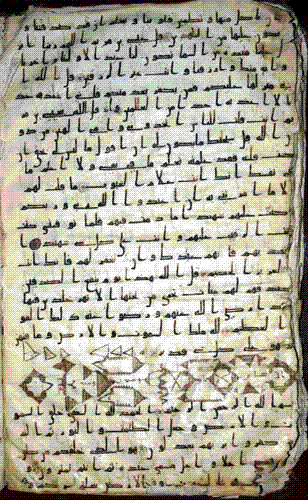


 Login
Login Questions
 Search