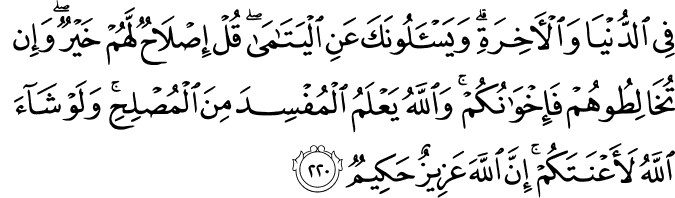
Ibn Al-Jawzi has harsh words for those who claimed that
was abrogated by
He writes,
ذكر الآية الثالثة: قوله تعالى "ولا تقربوا مال اليتيم إلا بالتي هي أحسن". قد زعم من قل فهمه من نقلة التفسير أن هذه الآية لما نزلت امتنع الناس من مخالطة اليتامى فنزلت "وإن تخالطوهم فإخوانكم"، وهذا يدل على جهل قائله بالتفسير ومعاني القرآن. أيراه يجوز قرب مال اليتيم بغير التي هي أحسن حتى يتصور نسخ؟ وإنما المنقول ابن عباس رضي الله عنهما وغيره من المفسرين أنهم كانوا يخلطون طعامهم بطعام اليتامى، فلما نزلت هذه الآية عزلوا طعامهم عن طعامهم، وكان يفضل الشيء فيفسده، فنزل قوله "وإن تخالطوهم فإخوانكم" فأما أن تدعى نسخ فكلا
He asks the obvious question: What is the impact of abrogation? That it is OK now to approach the property of the orphan with less than the best courtesy? I wish that criterion was uniformly applied by the abrogationists: What does abrogation of a verse or its ruling actually imply.
He explains that what Ibn Abbaas actually said was that they used to mix their meals with the meals of the orphans until 17:34 was revealed, then they separated their meals. Thus, if any abrogation claim may be made, it would be the other way around. However, mixing meals does not automatically mean unfairness to the orphans. It was caution (Wara`) that compelled them to do that.
I'd add that it's refreshing to see a claim that a verse in Chapter 2 has abrogated anything! It seems that abrogationist felt free to abrogate much of that chapter.


 Login
Login Questions
 Search