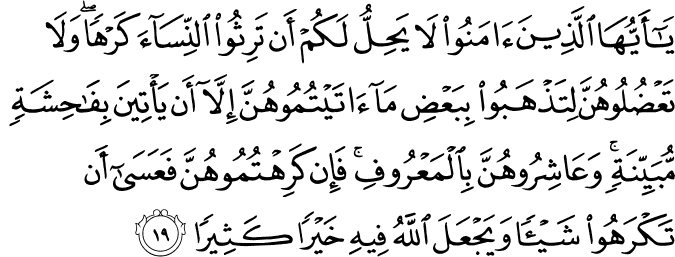
Al-Khazraji, in his book نفس الصباح في غريب القرآن وناسخه ومنسوخه, volume 1, page 270, quotes Makki quoting `Ataa' ibn Abi-Muslim Al-Khuraasaani saying that
was abrogated by the punitives (الحدود). I assume he meant the stoning penalty.
Aside from the fact that
the Sunna cannot abrogate the Quran, and aside from
the doubtful authenticity that there was a stoning penalty for adultery, and aside from the fact that the penalty for adultery is
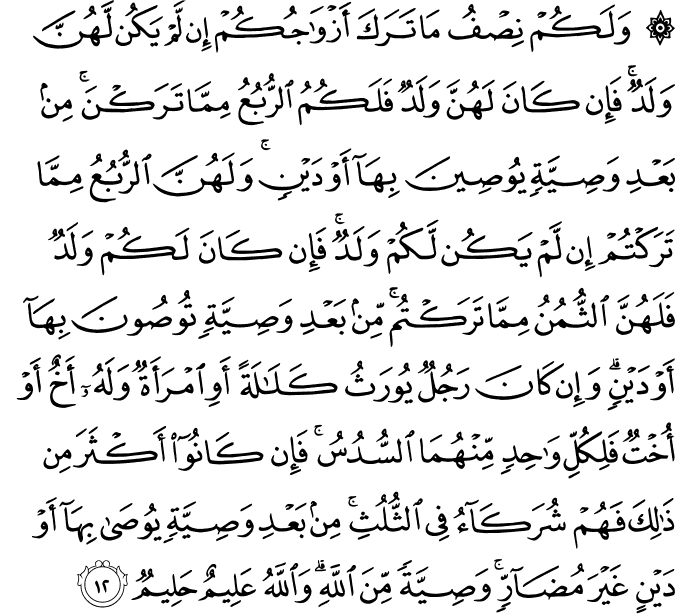
flogging and not the capital punishment, aside from all that, verse 4:19 is speaking of getting a dead woman's estate by force, which was a practice in pre-Islamic Arabia. The verses that put an end to that practice are 4:19 and the inheritance verses, such as
Makki said that the majority disagreed that 4:19 was abrogated.
I'm glad that Al-Khazraji defined which `Ataa' has made this claim. I often see the name `Ataa' in abrogation claims without a nickname or a last name and that causes ambiguity because there is another famous `Ataa', `Ataa' ibn Abi-Rabaah. So,
which one have we been quoting all this time?
Al-Khazraji mentioned that Al-Khuraasaani (d. 135 A.H.) authored a book about exegesis and abrogation and that he was not narrated from in Al-Bukhaari but in the other five books of Hadeeth.


 Login
Login Questions
 Search