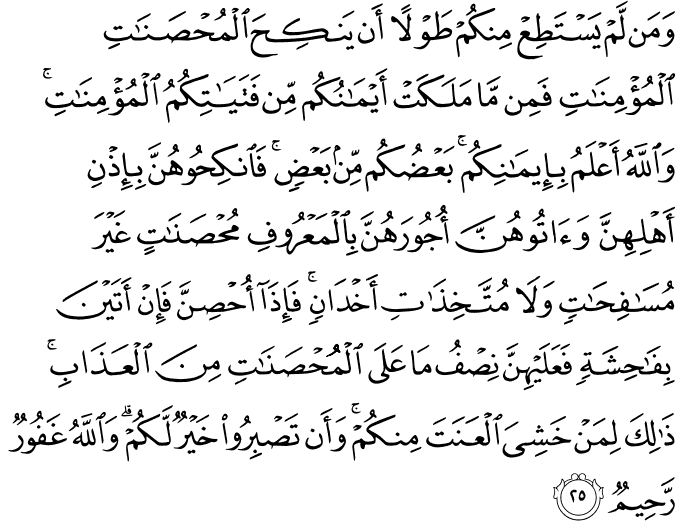
Al-Khazraji states in his book نفس الصباح في غريب القرآن وناسخه ومنسوخه, volume 1, page 279, that the part that says "That is for those who fear hardship among you" in
abrogated the first part that says "And who cannot afford to marry..."
Makki, however, in his book الإيضاح rejects that and says that the majority also reject it as a case of specification, not abrogation.
I agree, but it's not exactly specification; it's a choice of two and God recommends the other choice: staying celibate.
As-Shaatibi, in his book الموافقات, volume 3, page 69, reports that Ibn Abbaas made that claim. Ash-Shaatibi disagrees and says that this is a case of a condition for marrying believing slave girls. He also says that the meaning of naskh is different between the earliest scholars and those who followed. Dr. Mustafa Zayd, in his book النسخ في القرآن الكريم, volume 2, page 94 (item 818) agrees with him.


 Login
Login Questions
 Search