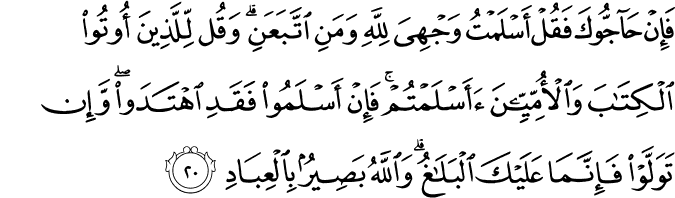
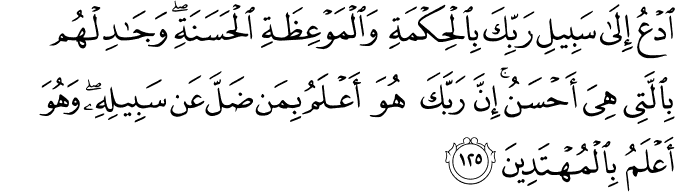
Al-Khazraji, in his book نفس الصباح في غريب القرآن وناسخه ومنسوخه, volume 1, pages 249-250, reports that "some people of knowledge" have said that
was abrogated by
He says that can only be if we accept what Qataada said that 16:110-16:128 were all revealed in Medina, but the majority said Chapter 16 was revealed entirely in Mecca, and therefore it cannot abrogate any of Chapter 3, which was revealed entirely in Medina.
That is a good reason to refute the claim, but it hinges on an uncertainty, namely, time of revelation. But why do we have to examine that when there is no contradiction between the two verses in the first place and therefore no cause to claim abrogation? Verse 3:20 simply says as we argue with non-Muslims, we are to state that we are submitting to the One God and ask them if they want to do the same. Verse 16:125 makes it clear that the argumentation must be civil and cordial. Where is the contradiction? What part of 3:20 did the pro-abrogation folk think was abrogated? The part that says we should say we are Muslims, or the part that says we are to invite non-Muslims to Islam?


 Login
Login Questions
 Search